
Pranav Sharma, a fellow blogger, was at the Dastan performance at the Kala Ghoda Festival. He took few snaps and a video of our performance. I am stealing the links from his blog and posting them here. I hope he would not mind it. :-)
Enjoy,
Danish
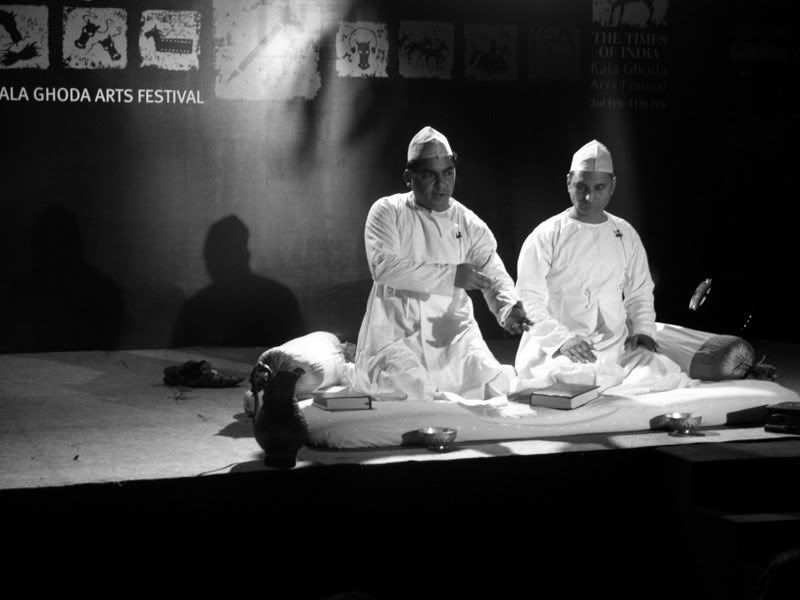
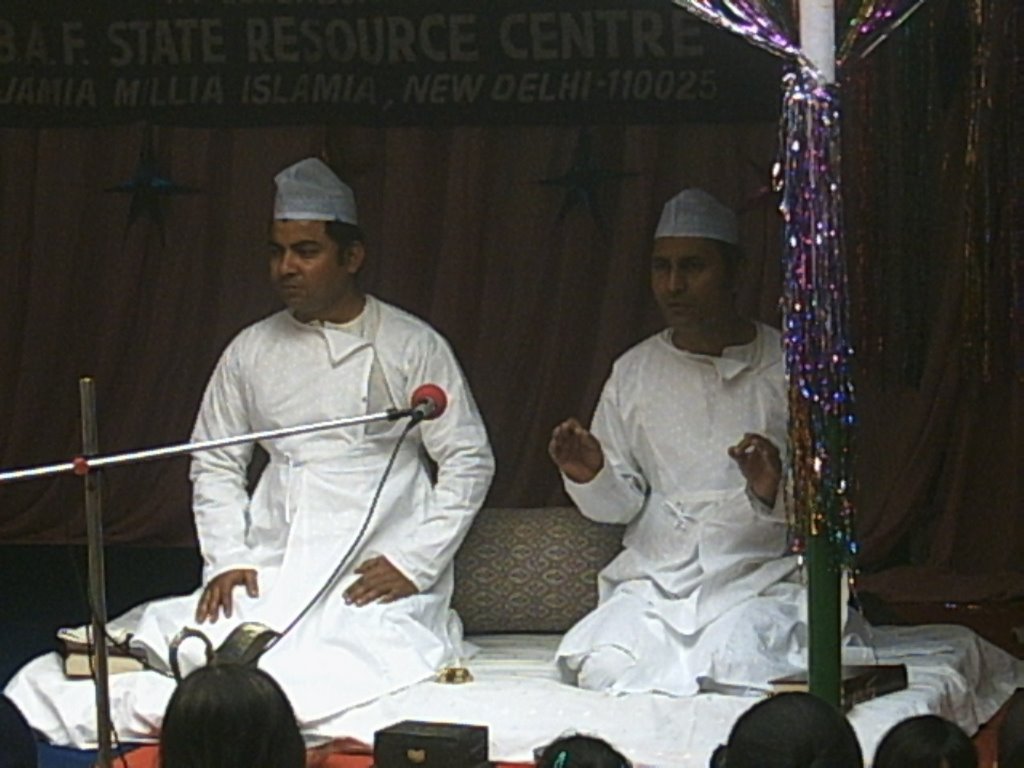 What is he picking upon? Your senses. :-)
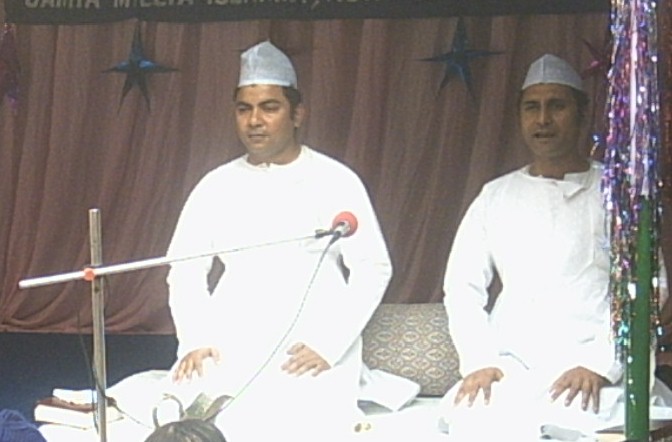 Are you ready for our tales?
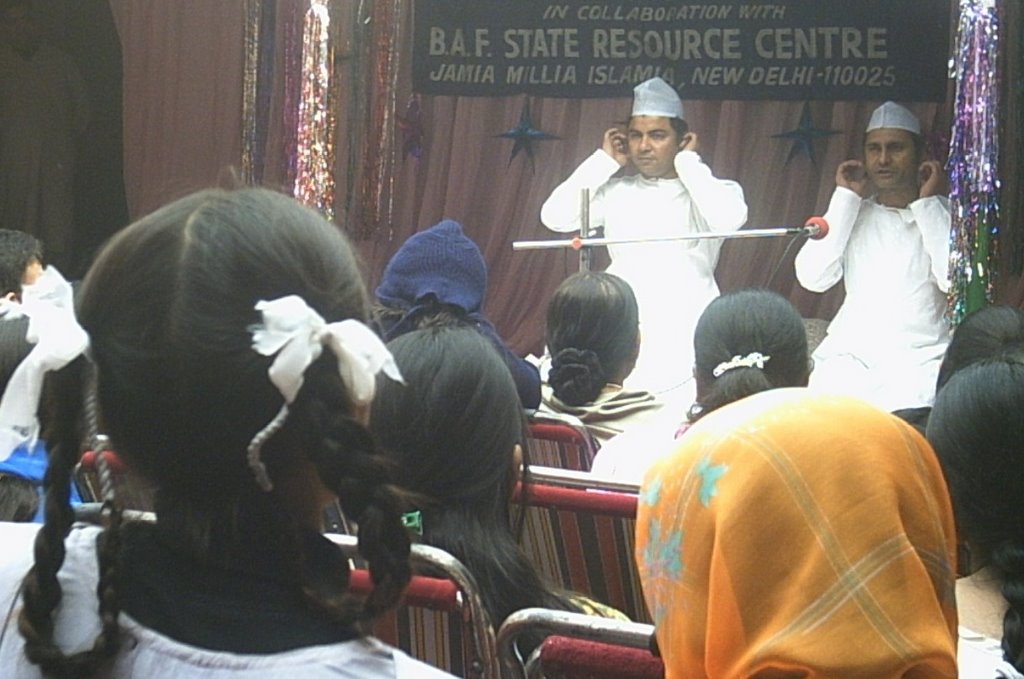 Hindustan Jannat Nishaan.
 Ok, I've got you now!
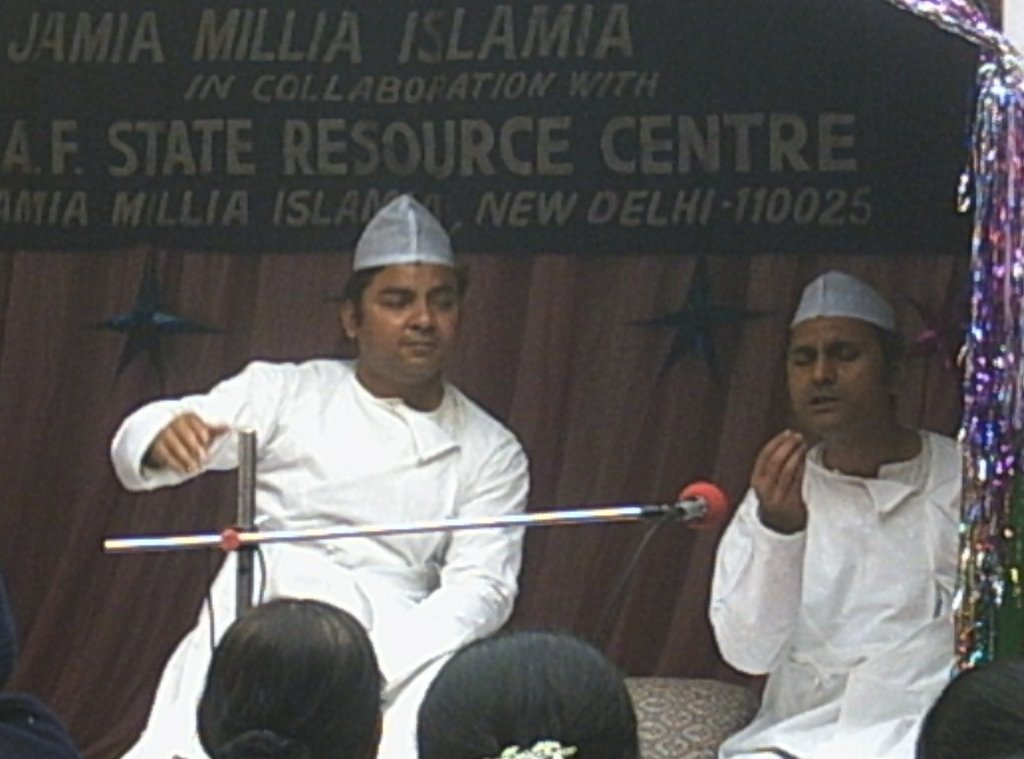 Amar Ayaar concocting a story.
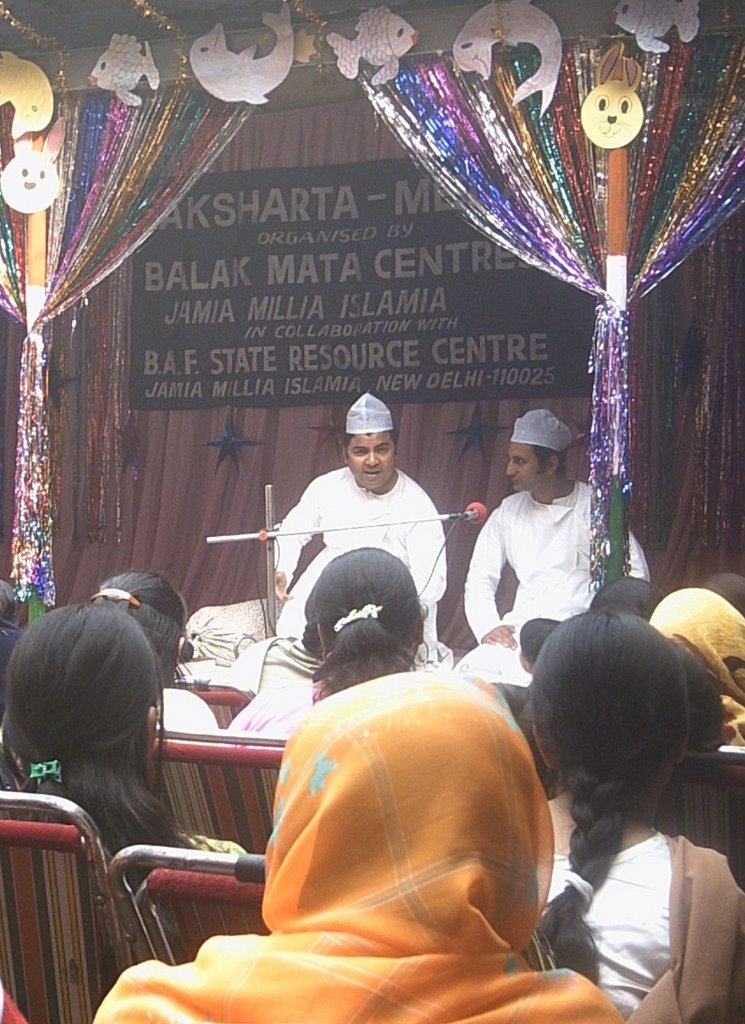 A tale being spun.
 Barq Firangi never tires of his Ayyaari.
 What possibly could be my thoughts? Ah! The Kids!
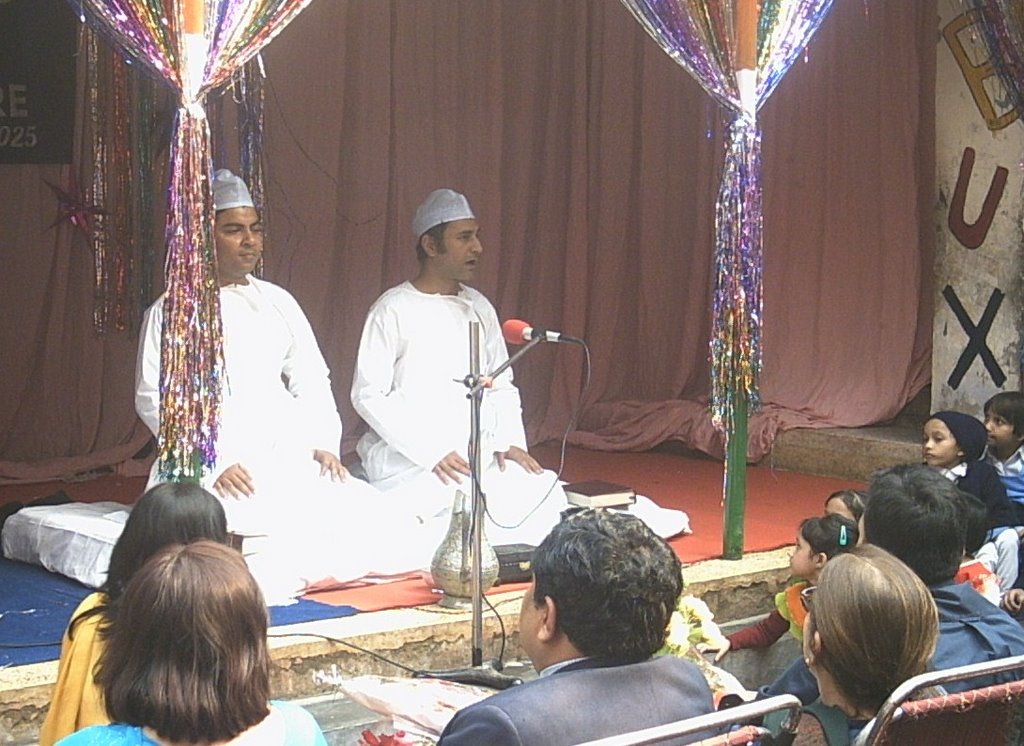 The tale ends.
 The Preamble
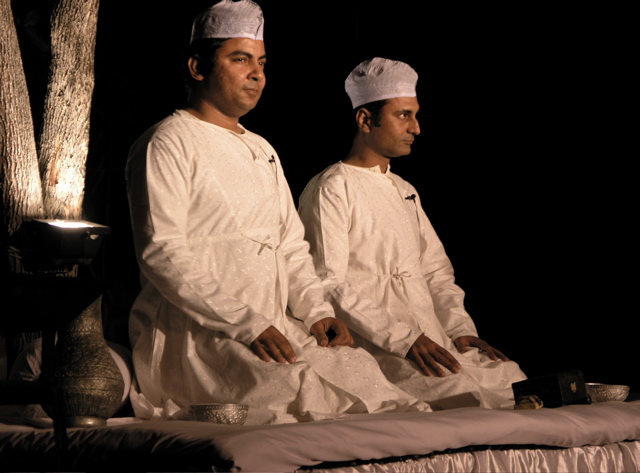 The Dastngo's prepare for a performance.
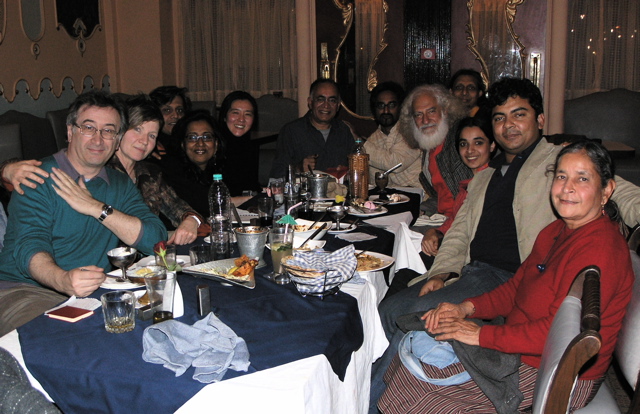 The Post-performance Dinner (From L to R): George Szirtes, Clarissa Upchurch, Munir Mohanty, Sharmistha Mohanty, Nagai Mariko, Ian Allan Sealy, Vivek Narayanan, Arvind Krishna Mehrotra, Kabir Mohanty, Ashwini Bhatt, Danish Husain, Mrs. A.K. Mehrotra.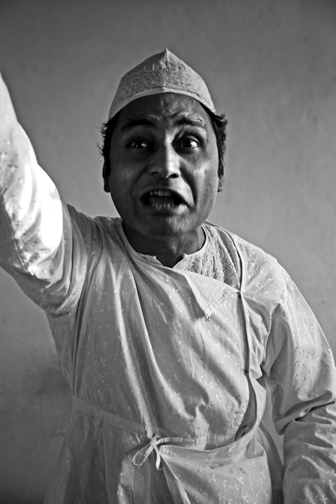
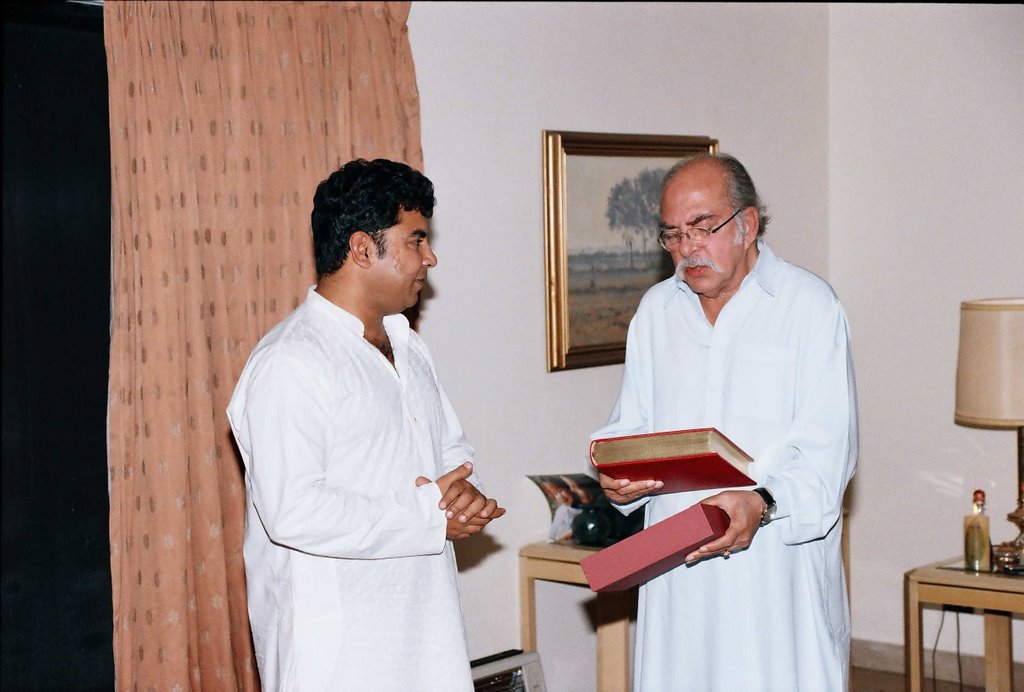
Taal Matol
Dastaan Goee!
By Shoaib Hashmi
Sixty years later, more or less, I can still remember what they looked like. Dark green and printed on cheapish paper they were a series of little booklets called 'Umroo Ayyaar Ki Ayyarian', and there were twenty-five or thirty of the not numbered so someone had to read them and put them in sequence, and an elder cousin had undertaken to read them to us kids, one book each evening after dinner. We did not mind because the whole day was spent loitering about as is the wont of the young, in a dream world populated by self, and Umroo and Amir Hamza and the adventures.
The series has long been out of print which is a great pity because it was the last trace of the hallowed tradition of Dastaan Goee, of story telling! The 'Daastaan-e- Amir Hamza' and its extended version the 'Talism-e-Hosh Ruba' is one of the greatest masterpieces of old style story telling; ostensibly an account of the adventures of Amir Hamza and his friends Umroo or more properly Amru, and Muqbal Vafadaar. They are a fictionalised account of Amir's prowess before the historical times of the Ahd-e-Risalat which gave him his towering reputation as a warrior of legend.
No one, not even the Metropolitan Museum of New York, has been able to trace exactly when or by whom they were first compiled. There are various references that it was by one of the two courtiers of Akbar the Great, Faizee or his brother Abul Fazl, and they might have been collated and compiled by one of them -- because the great 'Hamza Namah' with hundreds of huge and wonderful illustrations was compiled in Akbar's time, and still exists, but the origins of the original concoction of the tale, like all great folk tales is lost in time.
The tale was irresistible and totally compulsive; once you got into it you never got out! Beginning with the near simultaneous birth of Amru and Amir Hamza, it set the tone when the first person who put his finger in Amru's infant mouth to soothe him, lost his ring there; and went on from there. There have been attempts to ascribe it to some other hero named Hamza, but there is no doubt who was meant in the original, and after a myriad adventures taking them to Serenaded and India, the Maldives, they eventually even came circle and ended with Uhud.
But on the way the temptation was great, and everyone who got a chance added his own two bits worth extending it all over, and finally into the magic world of 'Talism-e-Hosh Ruba' full of fairies and Jinns and magicians and sorcerers; and vertically to the children and grandchildren of Amir Hamza and Amru. It grew to forty six large volumes which, thankfully Sang-e-Meel has condensed to thirteen!
The rub is that even in so many volumes the written word gives just the bare gist of the story, and the story teller was required to fill in the details and the dialogue and the colour himself, and captivate his audience with the richness of his narrative -- and this grew into the great tradition of Dastaan Goee. The story teller would travel from village to village keeping the whole populace riveted after dark, when there was nothing else to do, and maybe go on for days or weeks on end as long as the pin money poured in.
One thing was that the people who heard these stories, like us as kids, got lost in the story world and stopped working, and so the word grew that the stories were a 'Nahoosat', a curse and to be avoided. The other was that radio, and film and eventually TV came along, and people learnt to get their thrills otherwise and Dastaan Goee died out.
First our friend Shahnaz Aijazuddin got interested and was easily persuaded to try her hand at translating it and making it accessible to a younger generation. And last week a young man, Danish by name came over with the cast of 'Mirza Bagh' which was a great hit at the Festival of Performing Arts. He and a few friends have revived the art form and have been going all over India performing their own creations of the age old tales.
Shahnaz called us over, gave us a sumptuous high tea, and got Danish to perform one of the episodes for a captivated audience. It was a very sweet little evening. One could see how the genre gave the performer almost infinite scope for his own creativity and a vehicle for his gifts. We were told the form is catching the attention more and more in India and beginning to be written about all over.
I do not think the hundred odd TV channels will be quaking in their boots waiting to be swamped under; it will take more than an ancient art form to drag the masses, with their twenty second attention span, and their senses saturated, away from the idiot box to a more civilised way of being entertained, but it could become a nice little niche for a few civilised to occasionally dabble in culture without losing their minds. We hear the redoubtable Naseeruddin Shah may be interested, so they might be on the way!

