Tuesday, November 07, 2006

An Afternoon Posing Tales to Siya Singh

Amar Ayaar decides to kill Aazar Jaadu (Is Haraamzaade ko bhi maarna chahiye)...
Amar Ayyaar disguised as a sorcerer feigns Mahtaab's loss...
Aazar Jaadu about to fall for Kalwaarin...
An afternoon brimming with Mohammad Husain Jaa's poetry...
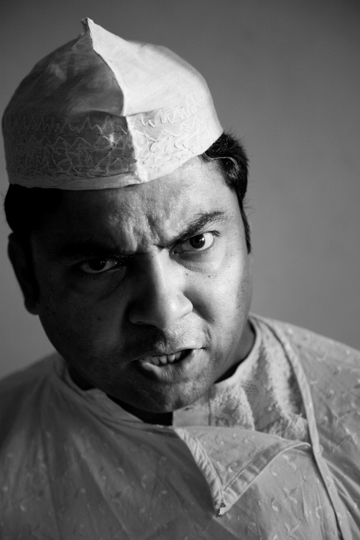
Afrasiyaab's gaze burns the tree...
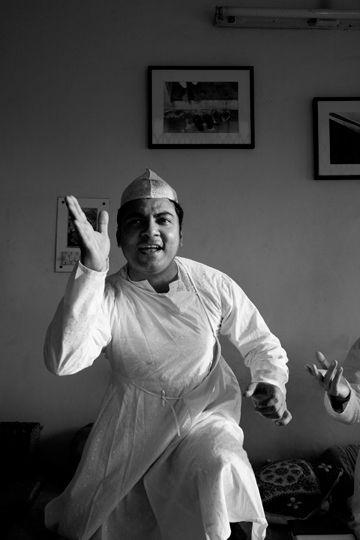
Kya Ayyaari Hai...

The images in this post are copyrighted. If you wish to use these images then you'll have to take Siya Singh's permission for the same. You may leave your details in the comment box and we'd get in touch with Siya for copyright permissions.

Thanks & best regards,

Danish

Thursday, October 19, 2006

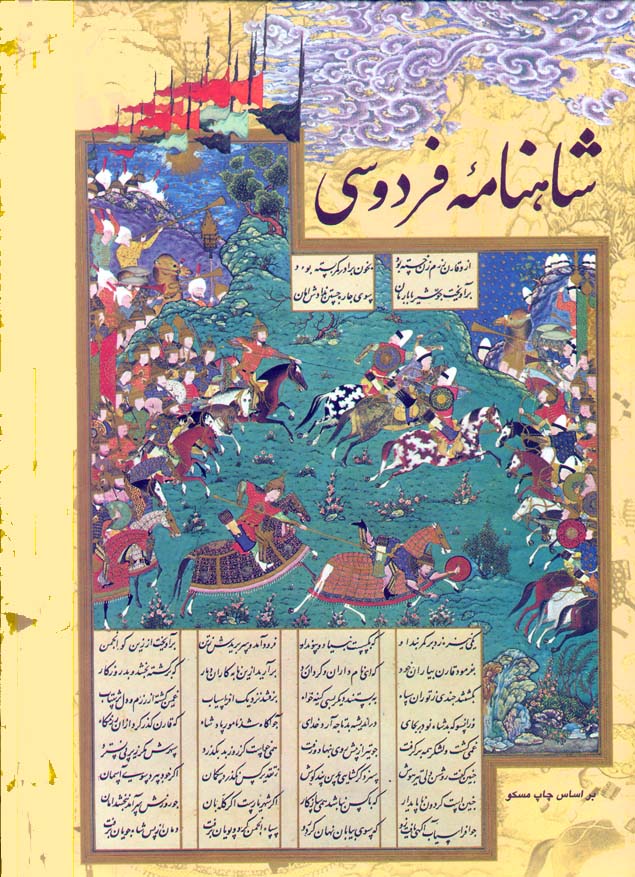
Celebrating Firdausi & Written Words


بناهاى آباد گردد خراب
ز باران و از تابش آفتاب

پى افكندم از نظم كاخي بلند
كه از باد و باران نيابد گزند

نميرم از اين پس كه من زنده‌ام
كه تخم سخن را پراكنده‌ام

Banāhāye ābād gardad kharāb
ze bārānō az tābeshē āftāb

pay afkandam az nazm kākhī boland
ke az bādō bārān nayābad gazand

namiram az īn pas ke man zenda am
ke tokhme sokhan rā parākanda am

"Prosperous buildings are ruined
By rainfall and exposure to sunlight"

"Ergo, I established a towering palace of verse
That sees no harm of neither gusts nor rainfall"

"I shall not demise as I am alive, henceforth
For I have disseminated the seeds of discourse"

Sunday, October 08, 2006

Bant Singh Can Still Sing


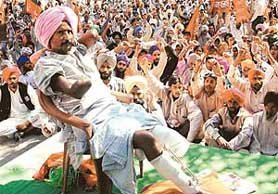
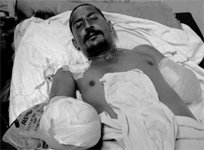
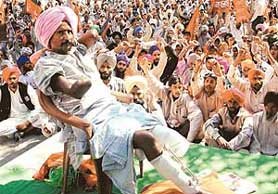
Most of us in India may have heard of Bant Singh. He is a dalit farmer from a village called Phullewal in Punjab. He's had one of the most traumatic and tragic experiences in recent times.

Bant Singh spent his time organizing farm hands in Punjab but that obviously didn't go well with the landlords. The series of ghastly acts began with his daughter getting raped by the village goons. Bant took refuge in the legal system and fortunately was able to get the perpetrators convicted. But this was just the beginning of his woes. The sympathizers of the rapists and landlords caught hold of him and battered him almost to death. The end result was that three of his limbs were chopped off. When admitted at the local district hospital, Bant Singh ran into further civic and administrative apathy and almost for three days was without any medical aid. The doctors apparently wanted some monetary consideration to treat him.

Anyway, to cut the long story short, Bant Singh is getting treated right now at Delhi's St. Stephens Hospital and the total expense to rehabilitate him, that is to provide him with prosthetic limbs would cost an upward of INR 300,000-00 (USD 6,500-00 approximately).

The Forum for Democratic Initiatives is organizing a fund raiser for him on October 15th, 2006 here in Delhi. The details of the fund raising program are given below. We'd appeal all of you, if you're in Delhi to make it for the fund raiser and contribute to Bant Singh's rehabilitation. If you're not in Delhi then please spread the word to your friends here in Delhi whom you think would be willing to attend the fund raiser and contribute to Bant Singh's relief.

Thank you and best regards,

Murtaza Danish Husain

Bant Singh Can Still Singh
Sun Oct 15, 2006 4:00 pm JNU City Centre, Near Mandi House
35, Feroze Shah Road
Delhi, Delh, India
Phone: 9868038981

Forum for Democratic Initiatives invites you to an evening of cultural performances to celebrate resistance.

Bant Singh, a Dalit singer and an agrarian worker, who continues to be defiant even after the amputation of three limbs, is currently being treated in St. Stephen’s Hospital, Delhi. The doctors are hopeful that with artificial limbs, Bant Singh will be able to walk again.

Bant Singh was assaulted by powerful landlords in Mansa, Punjab for consistently pursuing the legal battle against the rapists of his daughter and for organising the rural poor under the banner of Mazdoor Mukti Morcha (of the All India Agriculture Labour Association).

An evening of cultural performances to honour Bant Singh’s courage and defiance and to raise funds for his rehabilitation will be held on 15th October 2006 (Sunday)

venue: jnu city centre, near mandi house, 35, feroze shah road, new delhi

time: 4:00 pm

* an exhibition of photographs by raghu rai and others

* ‘video letter from bant singh’


* musical performance by rahul ram of indian ocean


* sufi songs by dhruv sangari


* bhojpuri songs by hirawal, a patna-based cultural group


* ragini and haryanvi folk songs


* akarmashi: a play based on saran kumar limbale’s story


* dastangoi: the lost art of urdu story telling by mahmood farooqui and danish husain


* protest poetry by balli singh cheema and others


* revolutionary Punjabi songs by iqbal udasi


Contributions for the programme will be directed to the ‘bant singh relief fund’

Entries are through coupons ranging from Rs. 250/- to Rs. 1,000/- For further details, coupons and contributions contact: Forum for democratic initiatives

9868038981/ 9811625577 / 9910074470/ 9810252416/ 9818416968/ 9871338943
Sunday, October 01, 2006

Yarn Spinner


Express logo

THE REAL PAGE 3

Yarn spinner

Spinning a fantasy no less magical than the Arabian Nights gives Delhite Danish Husain much to do

Shirin Abbas

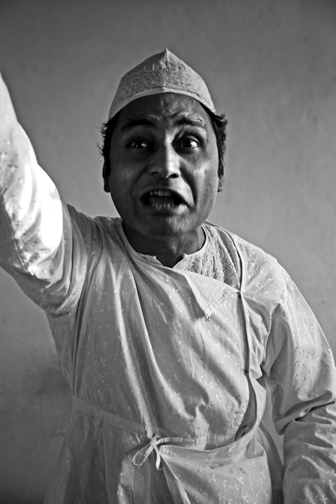
Lucknow, September 30: Chubby cheeked and cherubic, D(a)anish Husain looks as sweet and tempting as the Danish pastries his name is often mispronounced as. His foray into the art form was accidental, but about a dozen sessions of Dastan Goi later, this former corporate banker, now full-time theatre guy, has made it his mission to revive the art form and build a global audience for Dastan Goi.

"It was in March this year that I was approached by Mahmood Faroqui who had originally started Dastan Goi with friend Himanshu Tyagi and was on the look out for a partner. We had only twelve-odd days to prepare as the performance was on March 27. It was a very challenging art form and a dozen-odd shows later, I am so glad I took up the task," says Husain.

"While Himanshu and Mehmud had a similar style, between the latter and me, it is the contrast in our styles which heightens the performance," he reveals. Talking about the art form Husain says it is the universal appeal and the magic realism that have contributed to the popularity of Dastan Goi. "The fact that they have a Middle Eastern setting does not affect the universal appeal of the art form. The stories could be in any setting, the nuances could be European, Spanish, and Moroccan -even in these cultures stories get floated around. While it may change its attire, the core appeal remains."

Another plus is the lack of any moralistic stands in the script. "The story is pure entertainment. Apart from the basic premise that Amir Hamza is the good man, the Prophet's uncle out to destroy the charlatan Afrasiyaab, which exempted them from Islamic decrees, there is ample leverage for the main characters to indulge in all sorts of vices- wine, women, makkari, ayyari, magic, fantasy- hence, its appeal."

Language too becomes redundant faced with the perfect mimicry that accompanies the art. Husain talks of an American guest at a Mumbai performance who said he understood the entire story without knowing a word of Urdu. "Yes, it is Urdu at its literary best, with more than a fair sprinkling of Faarsi, but the stories have eloquence and a cadence that appeals to all irrespective of whether or not they understand Urdu. The language, the rhythm, the juxtaposition of ideas, metaphors and words bind you," he explains.

So does he see a glimmer of hope and the revival of not just the dying art form but also Urdu with a growing number of people interested in Dastan goi?

"Everything that you start is accompanied by hurdles. It's never a smooth walk initially. More so with people ready to give a communal flavour to the language, an administration apathetic to the cause and educational system that doesn't give you anything by way of an education. But it is heartening to note that despite all this, the response from the general public is always heartening. I think people are aware of their social and cultural responsibility and the need to protect and preserve these dying art forms is propelling them to get back to their roots and make this one bid to preserve their heritage. After the play in Mumbai I met a few young boys- in jeans cargos, tees- like your average metro teenagers and they asked me where and how they could learn Urdu. It made me feel so good about what I was doing."